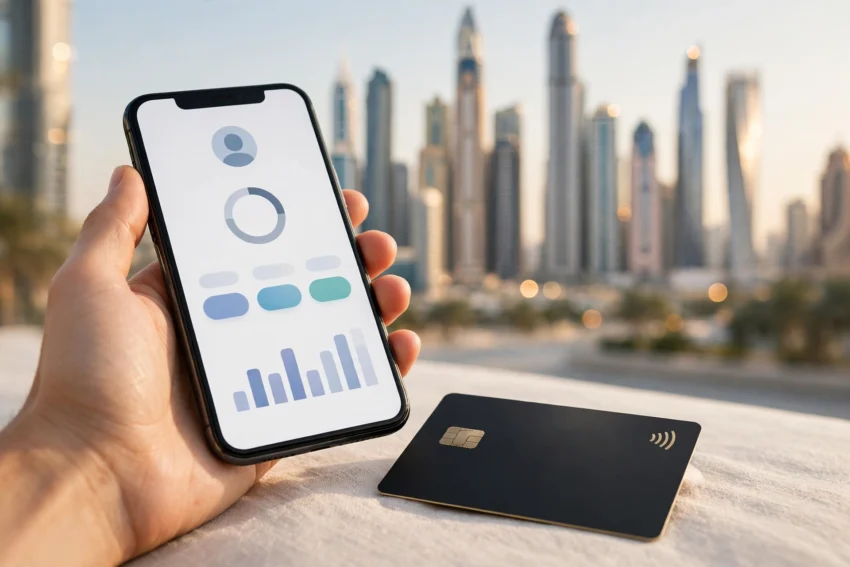
Moving to the UAE is exciting, but one of the first practical jobs every new resident faces is opening a local bank account. Your salary has to land somewhere, your rent is usually paid by cheque or bank transfer, and most government and utility services expect a UAE account. The good news is that in 2026 the process is faster and more digital than ever before. Many banks now let you apply from your phone in minutes, and a standard account is often approved within a few working days.
This guide explains how to open a bank account in the UAE in 2026: the documents you need, the minimum salary and balance rules, the best banks for expats, and the step-by-step process for both branch and online applications.
Why You Need a UAE Bank Account
A UAE bank account is not just a convenience. Most employers in the UAE pay salaries only into a local account, and many landlords ask for post-dated cheques drawn on a UAE bank. Utility bills, mobile plans, school fees and even some government services are easier to pay with a local debit card or direct debit. A local account also saves you the fees and poor exchange rates that come with using a foreign card for everyday spending.
It is also worth knowing that the UAE dirham is pegged to the US dollar, so your money keeps a stable value against the dollar while you live and work here. For many expats, that stability is one more reason to move their day-to-day banking into the country.
Can You Open a Bank Account Without a Residence Visa?
For a full personal current or savings account, the honest answer is almost always no. In 2026, nearly every reputable UAE bank requires a valid residence visa and an Emirates ID before it will open a standard account for you. A small number of banks offer limited non-resident accounts, but these usually come with high minimum balances, often tens of thousands of dirhams, higher fees, and no salary facility.
The practical sequence for most newcomers is therefore: get your residence visa stamped, apply for your Emirates ID, and then open your bank account. Some banks will accept your application as soon as the Emirates ID is issued, even before the physical card arrives, because the digital ID is already valid in their systems. If you are still waiting for your visa, our guide to getting an Emirates ID in 2026 explains the steps and timelines in detail.
Documents You Need to Open a Bank Account in the UAE
The list looks longer than it is. By the time your residence visa is stamped, you will already have most of these documents in hand:
- Original passport with a valid UAE residence visa.
- Original Emirates ID. Most banks want the physical card, although some accept the application receipt while the card is on its way.
- Salary certificate or employment letter on your employer’s letterhead, showing your monthly salary and joining date. Ask your HR department for this early, as it appears on most banks’ checklists.
- Proof of UAE address, such as a tenancy contract (Ejari is preferred) or a recent utility bill. Not every bank asks for this, but it is worth having ready.
- Three to six months of bank statements from your home country or a previous bank. This is not always required, but it strengthens your application, especially for freelancers and Golden Visa holders who do not have a UAE salary certificate.
- Source-of-funds declaration if you plan to deposit a large opening amount. Banks may ask where the money came from for deposits above around AED 50,000.
Freelancers and self-employed residents should also keep their freelance permit or trade licence handy, since banks usually ask for it instead of a salary certificate. If you work for yourself, see our guide to the UAE Freelance Visa in 2026 for the visa side of the process.
Types of Bank Accounts in the UAE
Before you apply, it helps to know which type of account fits your situation.
Current Account
A current account is the everyday workhorse. Your salary goes in, your bills and card payments go out, and most current accounts come with a chequebook, which you will need for rent. This is the account most employed residents open first.
Savings Account
A savings account is designed for money you want to set aside. Some savings accounts pay a small profit or interest, and they usually do not come with a chequebook. Many residents hold both a current account for spending and a savings account for their emergency fund.
Salary Account
A salary account is a current account linked to your employer’s payroll. Banks often waive the monthly fee or the minimum balance requirement if your salary is transferred in regularly, and salary accounts sometimes come with better offers on credit cards and personal loans.
Digital-Only Accounts
App-based accounts such as Mashreq Neo, Liv by Emirates NBD and Wio Bank are opened entirely on your phone with an Emirates ID scan and a selfie. They are popular with newcomers because there is no branch visit, but they are not automatically free: most charge a monthly fee of around AED 25 if you do not meet their balance or salary conditions.
Step-by-Step: How to Open a Bank Account in the UAE
Step 1: Choose Your Bank
Compare the minimum salary, minimum balance and monthly fees before you apply. The comparison table below covers the main options for expats in 2026.
Step 2: Gather Your Documents
Collect your passport, Emirates ID, salary certificate and proof of address. Make sure your Emirates ID is valid and your salary certificate is recent, as banks can reject out-of-date paperwork.
Step 3: Apply Online or Visit a Branch
For a first account, many people still prefer a branch visit, because a member of staff can check your documents on the spot and answer questions. Most UAE banks are open Sunday to Thursday, typically from around 8am to 3pm, with some branches open on Saturdays. If you choose the digital route, download the bank’s app, scan your Emirates ID, take a selfie for identity verification, and complete the application form. Mashreq Neo says the process can take as little as a few minutes.
Step 4: Wait for Approval
Approval for a standard account usually takes a few hours to a few days. Digital accounts are often the fastest, while branch applications can take up to three working days if documents need extra checks.
Step 5: Activate Your Account and Debit Card
Once approved, you will receive your account number and IBAN. Your debit card is usually issued at the branch or delivered to your address within five to seven working days. Activate the card, set your PIN, and register for online and mobile banking so you can manage everything from your phone.
Best Banks in the UAE for Expats in 2026
The right bank depends on your salary, how you bank, and whether you prefer branches or apps. Here is how the main options compare. Figures are typical 2026 rates and can vary by account type, so always confirm the current terms with the bank before applying.
Emirates NBD — typical minimum salary AED 5,000, typical minimum balance AED 3,000 — best for the largest branch network and a strong mobile app. FAB (First Abu Dhabi Bank) — typical minimum salary AED 5,000, typical minimum balance AED 3,000 — best for the largest UAE bank by assets and strong international transfers. ADCB — typical minimum salary AED 5,000, minimum balance varies by account — best for a good rewards programme and UAE-wide presence. Mashreq Bank / Mashreq Neo — typical minimum salary AED 3,000 to 5,000, minimum balance from zero on Neo — best for digital-first banking and fast online setup. RAKBANK — typical minimum salary AED 3,000, typical minimum balance AED 3,000 — best for a lower salary threshold and expat-friendly service. Dubai Islamic Bank (DIB) — typical minimum salary AED 3,000, typical minimum balance AED 3,000 — best for Sharia-compliant banking. Liv by Emirates NBD — often no minimum salary, minimum balance from zero — best for younger and digital-only users.
Emirates NBD is the most popular choice for newcomers because of its huge branch and ATM network across the Emirates. If you want Sharia-compliant banking, Dubai Islamic Bank is the largest Islamic bank in the country. If your salary is below AED 5,000, RAKBANK or a digital account such as Mashreq Neo is usually the easier route.
Minimum Salary, Minimum Balance and Fees
Most standard salary accounts in the UAE ask for a monthly salary of AED 3,000 to AED 5,000. If your salary is lower than that, do not give up: several banks offer accounts with lower thresholds, and digital banks are generally more flexible.
The minimum balance rule is the one that catches most people out. Many banks require you to keep around AED 3,000 in your account on average each month. If your balance falls below that, a monthly fee of roughly AED 25 to AED 26.25 usually applies. The fee is often waived if your salary is transferred into the account regularly, so a salary account is the cheapest option for most employed residents.
Other fees to watch for include charges for international transfers, ATM withdrawals abroad, and replacement cards. These vary widely between banks, so check the schedule of charges on the bank’s website before you commit. When you plan your monthly budget, remember that banking fees are a small but real part of the cost of living in Dubai, alongside rent, utilities and transport.
Opening a Bank Account Without a Salary Certificate
If you are a freelancer, a Golden Visa holder, or between jobs, you can still open an account. Banks such as Mashreq, RAKBANK and Liv offer digital or savings accounts with no strict salary requirement. Instead of a salary certificate, you will usually need to show proof of income, such as three to six months of bank statements from your home country, a freelance permit or business licence, and your Emirates ID. A minimum opening deposit of around AED 3,000 to AED 5,000 may apply.
The key is to be ready to explain your source of income clearly. Banks in the UAE follow strict anti-money-laundering rules, so a straightforward, documented answer to questions about your income will speed up your application.
Common Mistakes to Avoid
- Applying before your Emirates ID is ready. Most applications are rejected without it, so wait until the ID is issued.
- Ignoring the minimum balance rule. A few months of below-minimum fees add up. Choose an account whose balance rule you can comfortably meet, or one that waives the fee on salary transfer.
- Opening the wrong account type. A savings account will not give you a chequebook, and you will need one for rent. Open a current account if you are renting.
- Not comparing fees. International transfer fees and card charges differ a lot between banks. If you send money home regularly, compare these costs first.
- Sharing banking details on WhatsApp. The UAE Central Bank has warned banks and customers against using WhatsApp for banking communication. Your bank will never ask for your password or OTP on WhatsApp, so treat any such message as a scam.
Frequently Asked Questions
How long does it take to open a bank account in the UAE?
Digital accounts can be approved within hours, sometimes the same day. Branch applications usually take one to three working days, and your debit card normally arrives within five to seven working days.
What is the minimum salary to open a bank account in the UAE?
Most standard accounts ask for a monthly salary of AED 3,000 to AED 5,000. Some digital accounts and RAKBANK’s lower-threshold accounts accept salaries from AED 3,000, and a few digital options have no salary requirement at all.
Can I open a UAE bank account as a tourist?
Generally no. A full current or savings account requires a UAE residence visa and Emirates ID. Non-resident accounts exist at some banks but need a much higher minimum balance and come with higher fees.
Which bank is best for expats in the UAE?
There is no single best bank. Emirates NBD suits people who want the largest branch network, Mashreq Neo and Liv suit people who prefer to bank entirely on their phone, Dubai Islamic Bank suits those who want Sharia-compliant banking, and RAKBANK is a good option for lower salaries.
Do I need a chequebook in the UAE?
If you rent a home, almost certainly yes. Most landlords still ask for post-dated rent cheques, and only a current account comes with a chequebook. Make sure your account type includes one before you sign the tenancy contract.
Conclusion
Opening a bank account in the UAE in 2026 is a straightforward process once your residence visa and Emirates ID are in place. Gather your documents, compare the minimum salary and balance rules, and choose between a traditional bank with branches and a digital account you can open from your phone. For most employed residents, a salary account with Emirates NBD, FAB, ADCB or RAKBANK is the simplest choice, while freelancers and lower earners will find digital banks like Mashreq Neo and Liv more flexible.
Take your time choosing, read the fee schedule before you sign, and keep your balance above the minimum to avoid monthly charges. With the right account, your salary, rent and bills all become easier to manage, and you can focus on settling into life in the Emirates.
Disclaimer: This article is general information only and is not financial advice. Bank requirements, fees and minimum balances change over time and vary by account type. Always confirm the current terms directly with the bank before applying.