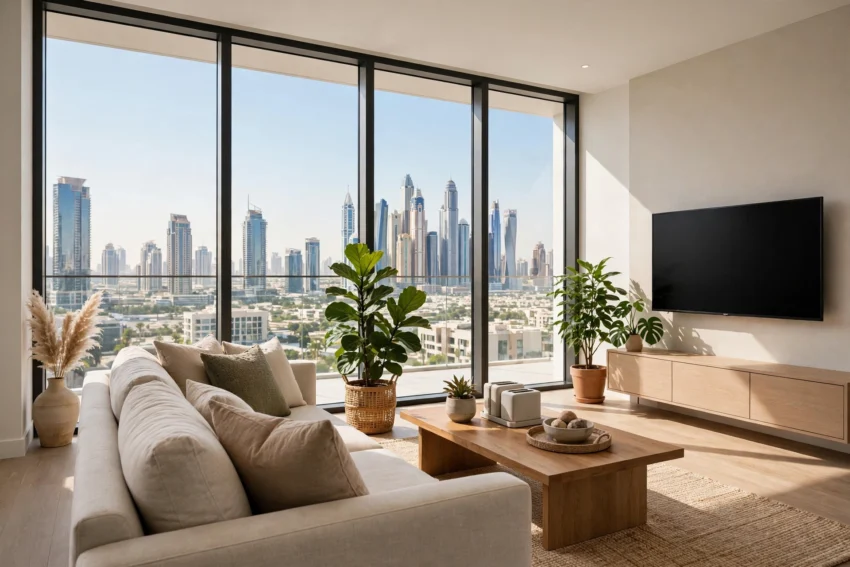
Your home holds almost everything that matters to you: your furniture, your electronics, your clothes, your children’s things, and the memories attached to them. In the UAE, most of us rent an apartment or villa, or live in a home we bought with a mortgage. Yet home insurance is one of the most overlooked types of cover in the country. Many residents only think about it after a burst pipe floods the living room, a fire damages the kitchen, or a break-in takes their valuables.
The good news is that home insurance in the UAE is surprisingly affordable. A basic contents policy for a one-bedroom apartment can start from around AED 300 a year, which works out to less than AED 1 a day. This guide explains what home insurance in UAE 2026 actually covers, what it typically costs, who really needs it, and how to choose the right policy without paying for cover you do not need.
What Is Home Insurance in the UAE?
Home insurance is a policy that pays to repair or replace your home and the things inside it after an insured event such as fire, theft, water damage or accidental damage. Depending on the policy, it can cover three different things:
- Building cover protects the structure itself: walls, floors, ceilings, fitted kitchens, bathroom fixtures and permanent fittings.
- Contents cover protects the belongings inside the home: furniture, appliances, electronics, clothing, jewellery and other personal items.
- Personal liability cover protects you if someone is injured in your home, or if your property accidentally damages someone else’s home, for example if a leak from your apartment damages the flat below.
You can buy building and contents cover together, or contents cover on its own. Which one you need depends on whether you own or rent your home.
Do You Legally Need Home Insurance in the UAE?
This is one of the most common questions, and the answer surprises many people: home insurance is not a legal requirement for individual homeowners or tenants in the UAE, in the way that third-party motor insurance is. There is no federal law that forces you to insure your home.
There are, however, two important exceptions. First, if you bought your home with a mortgage, your bank will almost always require building insurance as a condition of the loan, because the bank has a financial interest in the property until the mortgage is paid off. Second, some landlords and property managers in higher-value buildings ask tenants to hold contents and personal liability cover before handing over the keys.
Even where it is not required, going without cover is a gamble. A single burst pipe or kitchen fire can cause damage worth tens of thousands of dirhams, and without insurance that bill is yours alone.
The Main Types of Home Insurance in the UAE
1. Building Insurance
Building insurance covers the physical structure of the property and its permanent fixtures. It is mainly for homeowners, and it is the type of cover mortgage lenders usually insist on. Typical insured events include fire, explosion, storm damage, flooding from burst pipes and damage caused by falling trees or impact. Wear and tear, gradual damage and faulty workmanship are not covered.
2. Contents Insurance
Contents insurance covers the belongings inside the home. It is the most relevant type of cover for tenants, because the landlord’s building insurance covers the structure but not your sofa, television, laptop or clothes. Standard perils usually include fire, theft with forced entry, accidental water damage from burst pipes or appliance failure, and electrical damage. Many tenants are surprised to learn that their landlord’s policy offers them no protection at all for their own possessions.
3. Personal Belongings Cover
Some policies offer an optional add-on for portable items you carry outside the home, such as a phone, laptop, camera or jewellery. This is worth considering if you regularly carry expensive items with you around Dubai or Abu Dhabi, or while travelling.
4. Landlord Insurance
If you rent out a property you own in the UAE, landlord insurance covers the building, loss of rent if the property becomes uninhabitable after an insured event, and liability for tenant injuries or damage. Some landlord policies also cover damage caused by tenants.
What Does Home Insurance Cover?
While benefits vary by insurer, most UAE home insurance policies include:
- Fire, lightning and explosion damage to the building and contents
- Theft and burglary, usually requiring evidence of forced entry
- Water damage from burst pipes, leaking tanks or faulty appliances
- Accidental damage to the building or contents, on many comprehensive policies
- Alternative accommodation or loss of rent if your home becomes uninhabitable after an insured event
- Personal and third-party liability, including damage to neighbouring properties
- Personal belongings taken outside the home, if that add-on is included
Some policies also cover the cost of replacing locks after a burglary, or emergency repairs to make the home secure again. Always read the policy wording: two policies with the same price can offer very different levels of protection.
What Is Not Covered?
Home insurance has limits, and knowing them before you claim saves disappointment later. Common exclusions across UAE policies include:
- Wear and tear and gradual deterioration of the building or appliances
- Damage from poor maintenance, such as a long-ignored leak
- Faulty workmanship or damage caused during renovation work
- Theft without forced entry, for example if a door was left unlocked
- Appliance breakdown with no accident or insured event behind it
- Jewellery and valuables above sub-limits, often capped at 10 to 15 percent of the total contents sum insured unless specifically listed
If you own high-value jewellery, watches or art, list them separately on the policy and keep receipts and photographs. Insurers will ask for proof of value when you claim.
How Much Does Home Insurance Cost in the UAE in 2026?
Home insurance costs in the UAE depend on your property type, location, rebuild value, contents value, security features and the add-ons you choose. The figures below are typical market ranges for 2026, based on published insurer and comparison-site guides. Your own quote may be higher or lower.
| Property type | Typical cover | Indicative annual cost |
|---|---|---|
| 1-bedroom apartment | Contents only | AED 300 – 800 |
| 2–3 bedroom apartment | Contents, sometimes partial building | AED 800 – 1,500 |
| Villa | Full building and contents | AED 1,500 – 4,000 |
| Large villa with pool and outbuildings | Full building and contents | AED 2,000 – 8,000 |
As a rough guide, building insurance is often priced from around 0.1 percent of the rebuild value per year, while contents cover for a typical home usually costs between AED 300 and AED 1,500 a year. Some comparison sites advertise plans starting from as little as AED 1 a day for basic contents cover.
Factors that push the premium up include a high contents value, a villa rather than an apartment, an older building, a history of claims, and add-ons such as worldwide personal belongings cover. Factors that bring it down include a higher excess, good security (a monitored alarm or a building with 24-hour security), and buying building and contents cover together from the same insurer.
Home Insurance for Tenants vs Homeowners
If you rent
You typically do not need building insurance, because the structure is your landlord’s responsibility. Focus on contents cover and personal liability. The most important number is your contents sum insured: walk through your home and add up what it would cost to replace everything, not what you paid for it years ago. Under-insuring is a common mistake, and insurers can reduce a claim if the sum insured is far below the real value.
If you own your home
You need building cover, and usually contents cover too. Base the building sum insured on the rebuild cost, not the market value of the property. Land is not included in the rebuild cost, so insuring for the purchase price often means overpaying. Your insurer or a surveyor can help estimate the rebuild value.
If you are a landlord
Building cover is the priority, plus loss of rent and liability. Check whether your policy covers tenant-caused damage, and remember that your tenants’ belongings are not your responsibility to insure.
How to Choose the Right Home Insurance Policy
- Work out what you actually own. List your contents room by room and estimate replacement costs. This decides your sum insured, which is the single most important number in the policy.
- Compare like with like. A cheap policy with a low sum insured and a long exclusion list is not a bargain. Compare the sum insured, the excess, and the perils covered.
- Check the excess. The excess is what you pay on each claim. A higher excess lowers the premium but makes small claims pointless.
- Read the exclusions. Pay attention to water damage, accidental damage and jewellery sub-limits, which are the most common reasons claims are reduced or refused.
- Look at the claims process. A good insurer lets you report a claim online or through an app, and tells you clearly what documents it needs. Ask about typical settlement times before you buy.
- Review the policy every year. Your contents change when you buy new furniture or electronics. Update the sum insured at renewal so you are not caught under-insured.
Getting quotes from two or three insurers or a comparison site takes less than an hour, and the difference between the cheapest and the most suitable policy is often only a few hundred dirhams a year.
How to Make a Home Insurance Claim in the UAE
If something happens, act quickly and keep records:
- Make the home safe first. Stop a leak, switch off the electricity if there is water near sockets, and call emergency services if there is a fire.
- Tell your insurer as soon as possible, ideally within 24 to 48 hours. Most insurers accept claims by phone, app or online portal.
- Do not throw damaged items away until the insurer has seen them or told you it is fine to dispose of them.
- Take photographs and videos of the damage, and keep receipts for emergency repairs and replacement items.
- Report theft to the police and get a police report, which the insurer will ask for.
- Keep copies of everything you send, including the claim number and the name of the person you spoke to.
Claims for small amounts may be settled quickly with photos and receipts alone, while larger claims usually involve a surveyor visiting the property.
Frequently Asked Questions
Is home insurance mandatory in Dubai?
No. Home insurance is not legally required for homeowners or tenants in Dubai or the wider UAE. The main exception is mortgaged properties, where the bank usually requires building insurance as a loan condition.
How much is home insurance in the UAE?
For a typical apartment, contents-only cover often costs between AED 300 and AED 1,500 a year. Villas with full building and contents cover usually cost between AED 1,500 and AED 4,000 a year, and can be higher for large or high-value properties.
Does home insurance cover my belongings if I rent?
Yes, contents insurance is designed for exactly that. Your landlord’s building insurance covers the structure, not your possessions, so a tenant policy protects your furniture, electronics and clothing against fire, theft and water damage.
Does home insurance cover water damage from a burst pipe?
Most policies cover sudden water damage from burst pipes or appliance failure, including the damage to your contents. Gradual leaks caused by poor maintenance are usually excluded.
Can I insure jewellery and valuables?
Yes, but most policies cap jewellery and valuables at 10 to 15 percent of the total contents sum insured. High-value items should be listed separately on the policy, with valuations or receipts kept on file.
What is the difference between building and contents insurance?
Building insurance covers the structure and permanent fixtures of the home, while contents insurance covers the movable belongings inside it. Owners usually need both, tenants usually need contents only, and landlords usually focus on building cover.
Conclusion
Home insurance in the UAE is one of the cheapest forms of financial protection available, and it covers the risks that actually happen to ordinary households: a burst pipe, a kitchen fire, a break-in, or a leak that damages the flat below. Tenants need contents cover, homeowners need building and contents cover, and landlords need building cover with loss of rent protection.
Before you buy, work out the real replacement value of your belongings, compare two or three quotes on the same basis, and read the exclusions. The right policy is not always the cheapest one, but the one that pays out when you need it. For a few hundred dirhams a year, it is a small price for knowing that your home and everything in it is protected.
If you are reviewing your other cover at the same time, you may also find our guides useful: Motor Insurance Renewal in UAE explains how to renew your car cover online, our Life Insurance in UAE 2026 guide covers family protection, and our Health Insurance in UAE 2026 guide explains medical cover costs and how to choose a plan.
Disclaimer: This article is for general information only and is not financial or insurance advice. Policy terms, prices and availability vary between insurers and can change. Always read the policy wording and, if you are unsure, speak to a licensed insurance adviser before buying a policy.