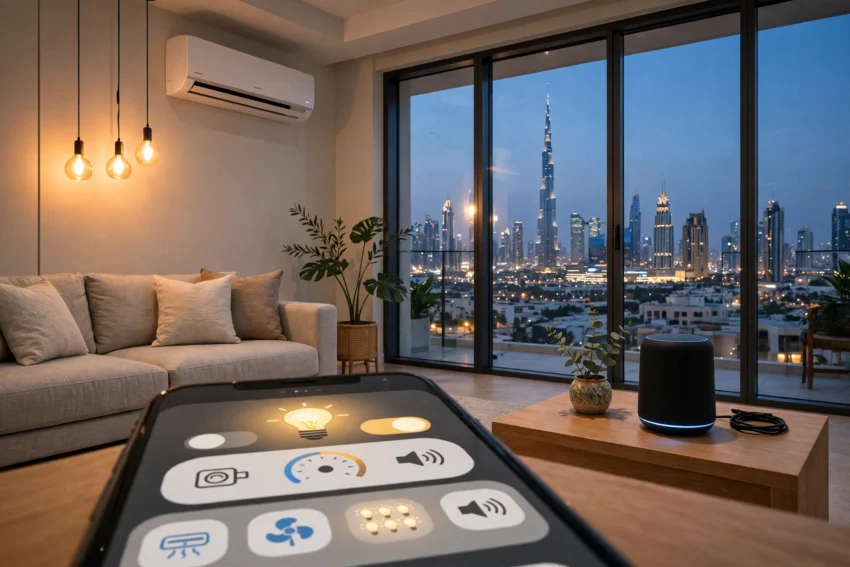
Smart home devices in the UAE have gone from a luxury for villa owners to something you can start with a single plug that costs less than a takeaway dinner. In 2026, the gadgets sold on Amazon.ae and Noon work with the same voice assistants and apps as anywhere else in the world, and most of them take minutes — not a technician visit — to set up.
If you live in a Dubai apartment, a Sharjah villa or an Abu Dhabi townhouse, this guide covers the devices that are actually worth buying here, what they cost in dirhams, and the mistakes that catch out first-time buyers in the Emirates.
Why Smart Homes Make Sense in the UAE
The UAE is an unusually good place for a smart home, for three practical reasons. First, the climate. Air conditioning is the biggest single item on most household electricity bills, so a device that turns the AC off when you leave, or cools the bedroom before you get home, pays for itself faster here than in a mild climate. Second, the infrastructure. Fibre and 5G home internet are widely available across the Emirates, and a stable connection is the one thing every smart device depends on. If your Wi-Fi drops out often, fix that before buying gadgets — our comparison of the best internet plans in the UAE in 2026 can help you pick the right connection for your home.
Third, the market itself has matured. A few years ago, shoppers had to import devices and hope they worked on UAE power. Today, Amazon.ae, Noon, Carrefour and Sharaf DG stock the major brands with local warranties, and the devices are built for the 240V power and Type G sockets used in the UAE. That matters: a gadget ordered from the United States runs on 120V and will not work here, so always confirm the voltage before buying from an overseas seller.
Dubai’s wider push toward connected living helps too. The city’s smart city projects are putting sensors, apps and digital services into everyday life, from DEWA’s smart meters to government services on your phone. A smart home is simply the version of that idea inside your own front door.
Pick Your Platform First
The single most important decision is not which gadget to buy — it is which platform to build on. Google Home, Amazon Alexa and Apple HomeKit are the three main ecosystems, and all three work in the UAE without any VPN or workaround.
Google Home is the most widely compatible platform in the Emirates, with the broadest device support and a stable app. Amazon Alexa is a close second, with the largest range of compatible third-party devices and voice support in both English and Arabic. Apple HomeKit is excellent if you already live in the Apple world, but it only works with HomeKit-certified devices, which narrows your choices.
The good news is that the Matter standard has made this choice much less risky than it used to be. Matter is an open standard backed by Google, Amazon, Apple and Samsung, and a Matter-certified device works with Google Home, Alexa and HomeKit at the same time. When you shop, look for the Matter logo on the box. It means the gadget will not lock you into one system, and it will keep working even if you switch phones or voice assistants later.
If you are unsure, start with Google Home or Alexa. Both have affordable speakers, both support Arabic voice commands to varying degrees, and both work with the widest range of affordable devices sold in the UAE.
The Best Smart Home Devices in the UAE in 2026
Smart Speakers and Voice Assistants
A smart speaker is the cheapest way to start, because it becomes the remote control for everything else. The Amazon Echo Dot (5th generation) sells for around AED 180 in the UAE, while the smaller Echo Pop is closer to AED 190 at Amazon.ae and adds Khaleeji Arabic voice interaction. Google’s Nest Mini is a similar price, around AED 150, and suits Android households. Apple’s HomePod Mini costs roughly AED 400 and is the natural choice for iPhone users — Siri handles Arabic commands well, which suits multilingual households.
Any of these will play music, set timers, answer questions and, most importantly, control your other smart devices by voice. Put one in the living room first and add more rooms later.
Smart Plugs: The Easiest First Device
A smart plug turns any ordinary appliance into a smart one. Plug a lamp, a fan or a water heater into it, and you can switch it on and off from your phone, set schedules and track how much power it uses.
The TP-Link Tapo P100 costs around AED 38 and is one of the best-value gadgets you can buy in the UAE. The Tapo P110, at roughly AED 73, adds energy monitoring so you can see exactly what an appliance costs to run. Both work over 2.4GHz Wi-Fi and support Alexa and Google Home. For a first purchase, two or three smart plugs and a speaker will transform how a home feels for well under AED 300.
Smart Lighting
Smart bulbs let you dim the lights, change their colour and set them to switch off automatically. Philips Hue is the best-known brand — a single 11W Hue bulb costs about AED 139 at Carrefour UAE — and it works with Alexa, Google Assistant and Apple HomeKit. Cheaper bulbs from brands like Tapo and Xiaomi do the same basic job for less, and they are a good choice for bedrooms and hallways where you do not need the full Hue ecosystem.
One practical tip: smart bulbs only work when the wall switch stays on. If your family keeps switching lights off at the wall, smart switches — which replace the wall switch itself — are a better option, though they usually need a little more confidence with home wiring.
Climate Control: The Device That Saves Real Money
Cooling is where a smart home earns its keep in the UAE. A smart IR controller, such as the SwitchBot Hub 2 or the Broadlink RM4 Pro, costs around AED 120–200 and makes any remote-controlled air conditioner smart. It learns your AC remote’s signals, then lets you control the temperature from your phone or by voice, set schedules, and switch the AC off automatically when you leave home.
A smart thermostat such as the Google Nest Thermostat goes further, learning your routine and adjusting cooling around it. Manufacturers suggest savings of up to around a fifth on cooling costs, and while your own saving will depend on your home and habits, the DEWA Smart App already lets you watch your consumption month by month — so you can see the difference for yourself. If you are setting up digital services for life in the UAE, our UAE Pass setup guide is a useful companion read, since the same phone becomes the key to both your home and your government services.
Security Cameras and Smart Locks
Security is the other category where smart devices make an obvious difference. An indoor camera such as the TP-Link Tapo C200 costs around AED 87 and lets you check on children, pets or a room while you are away. The Ring Indoor Cam, at roughly AED 200, adds tight Alexa integration and clear 1080p video. For the front door, Yale smart locks — many of which now support Matter — let you unlock with a code or your phone instead of a key, and log who came and went.
One caution: check the rules of your building before installing anything on a front door or balcony. Many UAE residential towers require permission for external fixtures, and a doorbell camera that films a shared corridor can cause problems with neighbours and building management.
What Does a Smart Home Cost in the UAE?
You can start for very little and spend as much as you like. A realistic starter setup — a smart speaker, two or three smart plugs and a smart bulb — costs roughly AED 300–500. A comfortable setup for a one-bedroom apartment, adding an IR controller, a camera and a few more lights, comes to around AED 1,500–2,500. A full setup for a villa, with multiple cameras, smart locks, a thermostat and whole-home lighting, can run to AED 4,000 or more — and professional installers in Dubai will design and fit bespoke systems for far more than that.
Etisalat also sells a Smart Living service, from around AED 10 a month plus device costs, for customers who would rather have the operator manage the setup. It is worth comparing against buying devices yourself, since the devices are usually the same brands at retail prices.
Prices change often with sales on Amazon.ae and Noon, so treat the figures above as a guide and check the live price before you buy. Watch for White Friday and Ramadan sales, when smart home bundles are often discounted heavily.
Where to Buy Smart Home Devices in the UAE
Buy from sellers who offer a UAE warranty. Amazon.ae has the widest selection, and items sold directly by Amazon.ae include local warranty cover — be careful with third-party sellers shipping from abroad. Noon carries most major brands with fast delivery across the Emirates. Sharaf DG and Carrefour are good when you want to see a device before buying, and their staff can usually confirm whether a product works with your phone and voice assistant.
Wherever you buy, check three things before paying: that the device states 100–240V input or is made for UAE power, that it works with your chosen platform, and that the warranty is valid in the UAE rather than only in the country it was imported from.
5 Mistakes to Avoid
First, buying devices from overseas sellers without checking voltage and warranty. Second, mixing three platforms at once — pick one ecosystem and add Matter devices to it. Third, putting smart gadgets on the 5GHz Wi-Fi band; most of them only use 2.4GHz, so connect them there and leave 5GHz for phones and laptops. Fourth, skipping the Wi-Fi: a home with dead spots needs a mesh Wi-Fi system before it needs smart lights. And fifth, forgetting security — change default passwords, keep device software updated, and use two-factor authentication on the apps that control your home.
How to Get Started This Weekend
Start small and in this order. First, pick your platform and buy one smart speaker. Second, add two smart plugs for a lamp and one appliance you use every day. Third, fit a smart IR controller to your main air conditioner — this is the device most UAE households notice first. Fourth, add one camera or a smart bulb in the room you use most. Live with that setup for a month, and only then decide what to add next. The households that enjoy smart homes most are the ones that automated one real annoyance at a time, rather than buying a box of gadgets in a single order.
Frequently Asked Questions
Do smart home devices work in the UAE?
Yes. Google Home, Amazon Alexa and Apple HomeKit all work in the UAE without a VPN or workaround, and the major brands are sold locally with UAE warranties. Just make sure any device you buy is rated for 240V power and Type G sockets.
What is the best smart home system for a Dubai apartment?
For most apartment dwellers, Google Home or Amazon Alexa is the best starting point, because both support the widest range of affordable devices sold in the UAE. Apple HomeKit suits iPhone-heavy households but limits your choice of devices. Look for Matter-certified gadgets so your devices keep working whatever platform you choose later.
How much does a smart home cost in the UAE?
A starter setup with a smart speaker and a few smart plugs costs around AED 300–500. A comfortable setup for a one-bedroom apartment is roughly AED 1,500–2,500, while a full villa setup can exceed AED 4,000. Buying during sales on Amazon.ae or Noon can cut the cost significantly.
Can smart home devices really cut my DEWA bill?
They can help, mainly by controlling air conditioning — the largest part of most UAE electricity bills. Smart IR controllers and thermostats switch cooling off when rooms are empty and pre-cool before you arrive, and the DEWA Smart App lets you track the result month by month. Savings vary by home and habits, so treat any percentage claim as an estimate, not a guarantee.
Do I need a professional installer?
No, not for a basic setup. Smart speakers, plugs, bulbs and cameras are designed for self-installation and take minutes each. A professional installer is worth considering only for whole-villa systems, wired smart switches, or integrated lighting and curtain automation.
Conclusion
Smart home devices in the UAE are no longer a hobby for enthusiasts. The platforms work here, the shops stock the devices with local warranties, and the prices have fallen to the point where a useful setup costs less than a single month of cooling. Start with a speaker and a couple of smart plugs, add an IR controller for your air conditioner, and let the system grow around the routines you actually have. Your home will not become smart overnight — but after a month of lights that switch themselves off and an AC that is already cool when you walk in, you will wonder why you waited.
Prices mentioned in this article were checked against UAE retailer listings in November 2026 and may change. Always confirm the current price and warranty terms before buying.